
Sugarcane Pressing & Processing Mill: Building an Integrated Sugar Value Chain
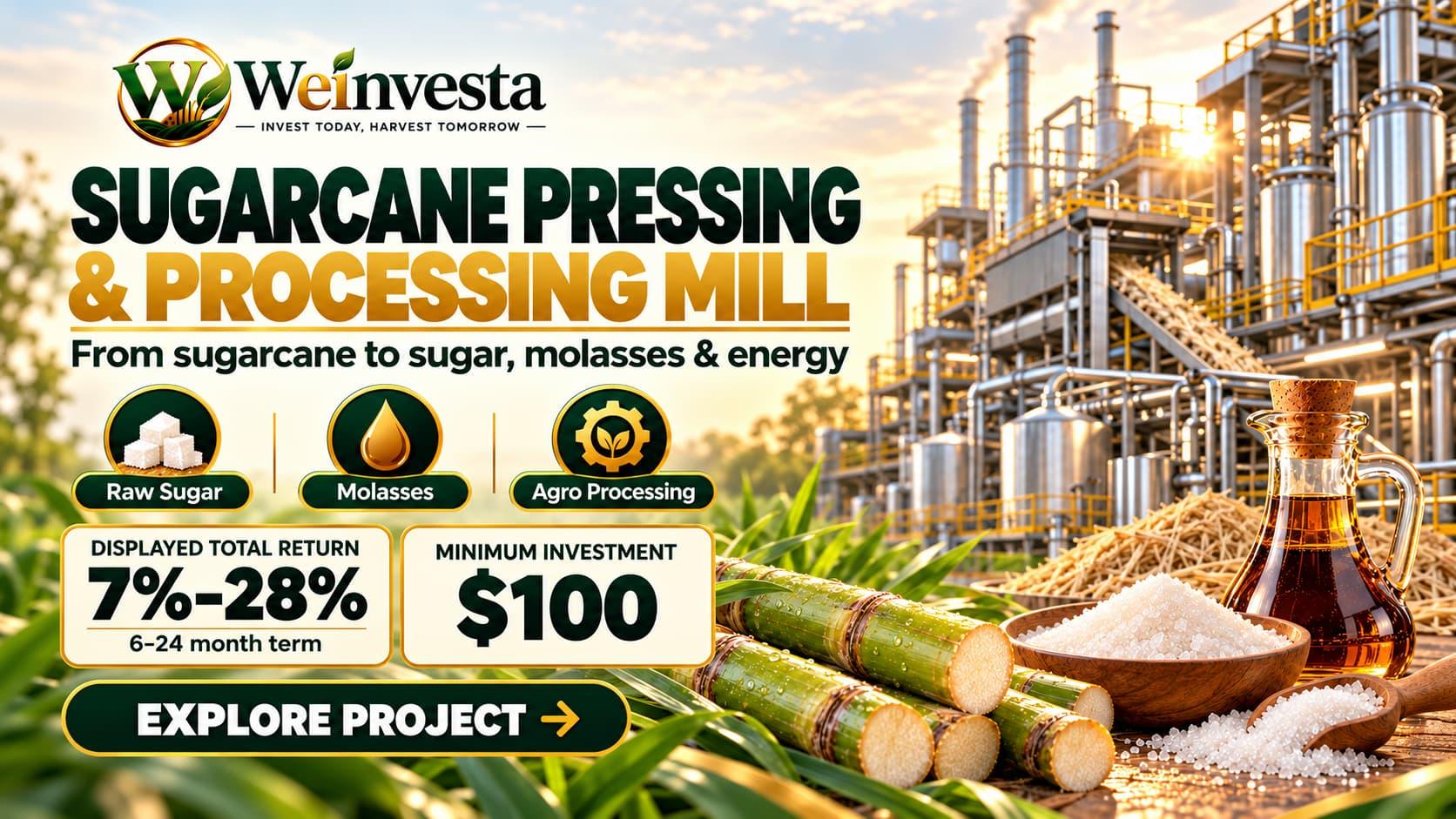
Sugarcane Pressing & Processing Mill: Building an Integrated Sugar Value Chain
Sugarcane is more than a source of consumer sugar. When processed through an integrated mill, a single crop can produce raw sugar, molasses, ethanol feedstock, and bagasse for paper, packaging, biomass, and recycling operations.
The Weinvesta Sugarcane Pressing & Processing Mill Project proposes a heavy-duty facility for cane reception, washing, crushing, juice extraction, clarification, evaporation, crystallization, storage, and quality control.
The project is classified under Agro Processing and has planned operations across Brazil, India, Thailand, Colombia, and Guatemala.
Project Overview
Category: Agro Processing
Status: Active
Target Amount: $199,204.65
Displayed Return Range: 7%–28%
Available Terms: 6, 12, or 24 months
Displayed Investment Range: $100–$1,000,000
Payout: On maturity
Planned Countries: Brazil, India, Thailand, Colombia, and Guatemala
Primary Outputs: Raw sugar, molasses, ethanol feedstock, and bagasse
Funding progress and investment terms may change. Review the live project page before making a decision.
What Does a Sugarcane Processing Mill Do?
A sugarcane mill receives harvested cane and separates its juice from the fibrous stalk. The juice is cleaned, concentrated, and crystallized to produce sugar, while the remaining streams can be used across several industries.
The planned process includes:
Receiving and weighing harvested cane.
Washing and preparing the stalks.
Crushing the cane and extracting juice.
Clarifying the juice and removing impurities.
Evaporating water to create concentrated syrup.
Crystallizing and separating raw sugar.
Storing molasses.
Collecting and handling bagasse.
Testing product quality.
Packaging and distributing finished products.
The facility is expected to operate primarily during the harvesting season, with planned maintenance during the off-season.
Integration With Agricultural Production
The mill is intended to serve as a primary buyer for estate-grown sugarcane while also sourcing cane from regional farmers.
This integration may help:
Create a planned market for harvested sugarcane
Coordinate harvesting and mill intake
Reduce delays between cutting and processing
Improve raw-material traceability
Support consistent mill utilization
Build several products from the same crop
Learn more about Weinvesta’s agricultural activities through the Premium Agriculture Project.
Potential Revenue Streams
Raw Sugar
The project plans to supply sugar to food manufacturers, wholesalers, retail distributors, and other commercial buyers.
Molasses
Molasses can be sold to animal-feed producers, fermentation businesses, distilleries, and ethanol-related operations.
Ethanol Feedstock
Selected sugarcane juice, syrup, or molasses streams may be supplied as feedstock for ethanol production, subject to the project’s equipment and commercial agreements.
Bagasse
Bagasse can be used for industrial fuel, biomass, paper pulp, packaging products, and biodegradable tableware.
The related Sugarcane Bagasse Recycling Project demonstrates how this byproduct may be converted into additional commercial products.
Commercial Strategy
The planned commercial approach includes:
Supplying national food manufacturers
Selling sugar through wholesale distribution
Developing retail-market channels
Supplying molasses to feed and fermentation buyers
Connecting bagasse with recycling and bio-energy operations
Establishing longer-term commercial supply agreements
Expanding production according to market demand
Displayed Investment Options
6-Month Option
Displayed Total Profit: 7%
Lock Period: 6 months
Payout: On maturity
Displayed Range: $100–$1,000,000
12-Month Option
Displayed Total Profit: 14%
Lock Period: 12 months
Payout: On maturity
Displayed Range: $100–$1,000,000
24-Month Option
Displayed Total Profit: 28%
Lock Period: 24 months
Payout: On maturity
Displayed Range: $100–$1,000,000
These figures describe the options displayed on the project page. They should not be interpreted as guaranteed future results.
🚀 View the related investment options
Role in the Wider Agricultural Ecosystem
The project could connect several parts of the sugarcane value chain:
Sugarcane cultivation
Harvesting and transportation
Cane crushing and juice extraction
Sugar production
Molasses supply
Ethanol feedstock
Bagasse recycling
Biomass energy
Wholesale and retail distribution
Explore other Agro Processing projects.
Key Project Risks
Cane-Yield Variability
Weather, soil conditions, crop disease, irrigation, and farming practices can affect sugarcane output.
Sugar-Price Volatility
Domestic and international sugar prices may change according to production, imports, regulations, and market demand.
Harvest Timing
Sugarcane must be processed soon after harvesting. Delays may reduce juice quality and sugar recovery.
Mill Downtime
Equipment failure involving crushers, boilers, evaporators, centrifuges, or power systems may interrupt production.
Boiler and Industrial Safety
High-pressure steam, heat, moving machinery, and combustible materials require strict industrial-safety controls.
Energy and Water Costs
The mill requires substantial water, electricity, and thermal energy. Cost increases may affect profitability.
Environmental Regulation
Water use, wastewater, emissions, solid-waste handling, and factory operations may require permits and monitoring.
Labor Availability
Harvesting and seasonal mill operations require trained technical and operational workers.
Imported-Sugar Competition
Lower-priced imports or established local producers may place pressure on selling prices.
Review the Weinvesta Risk Disclosure, Terms and Conditions, and project documents before participating.
How to Explore the Project
Visit the Sugarcane Processing Mill Project.
Review its business plan, documents, and risks.
Compare the displayed 6-, 12-, and 24-month options.
Select an option aligned with your objectives and risk tolerance.
Create an account and complete verification if required.
Use the investment button under the relevant project option.
Monitor available project information through your account.
Read How Weinvesta Works for further guidance.
Frequently Asked Questions
What products will the mill produce?
The planned outputs include raw sugar, molasses, ethanol feedstock, and bagasse.
Which countries are included?
Brazil, India, Thailand, Colombia, and Guatemala.
What returns are displayed?
The current cards display 7% for 6 months, 14% for 12 months, and 28% for 24 months.
When are payouts scheduled?
The displayed options state that payouts are made on maturity.
Are the displayed returns guaranteed?
No. Production, commodity prices, operating costs, demand, regulation, equipment, and other factors may affect actual results.
Explore the Sugarcane Processing Mill Project
By connecting sugarcane farming, crushing, sugar production, molasses sales, ethanol feedstock, and bagasse recycling, the project aims to establish an integrated agro-processing value chain.
🏭 View the Project and Related Investment Options
More From the Blog
Ready to Grow Your Wealth?
Put your capital behind real-world projects with real assets behind them.