
Sugarcane Bagasse Recycling Project: Turning Agricultural Waste into Sustainable Products
Sugarcane Bagasse Recycling Project: Turning Agricultural Waste into Sustainable Products
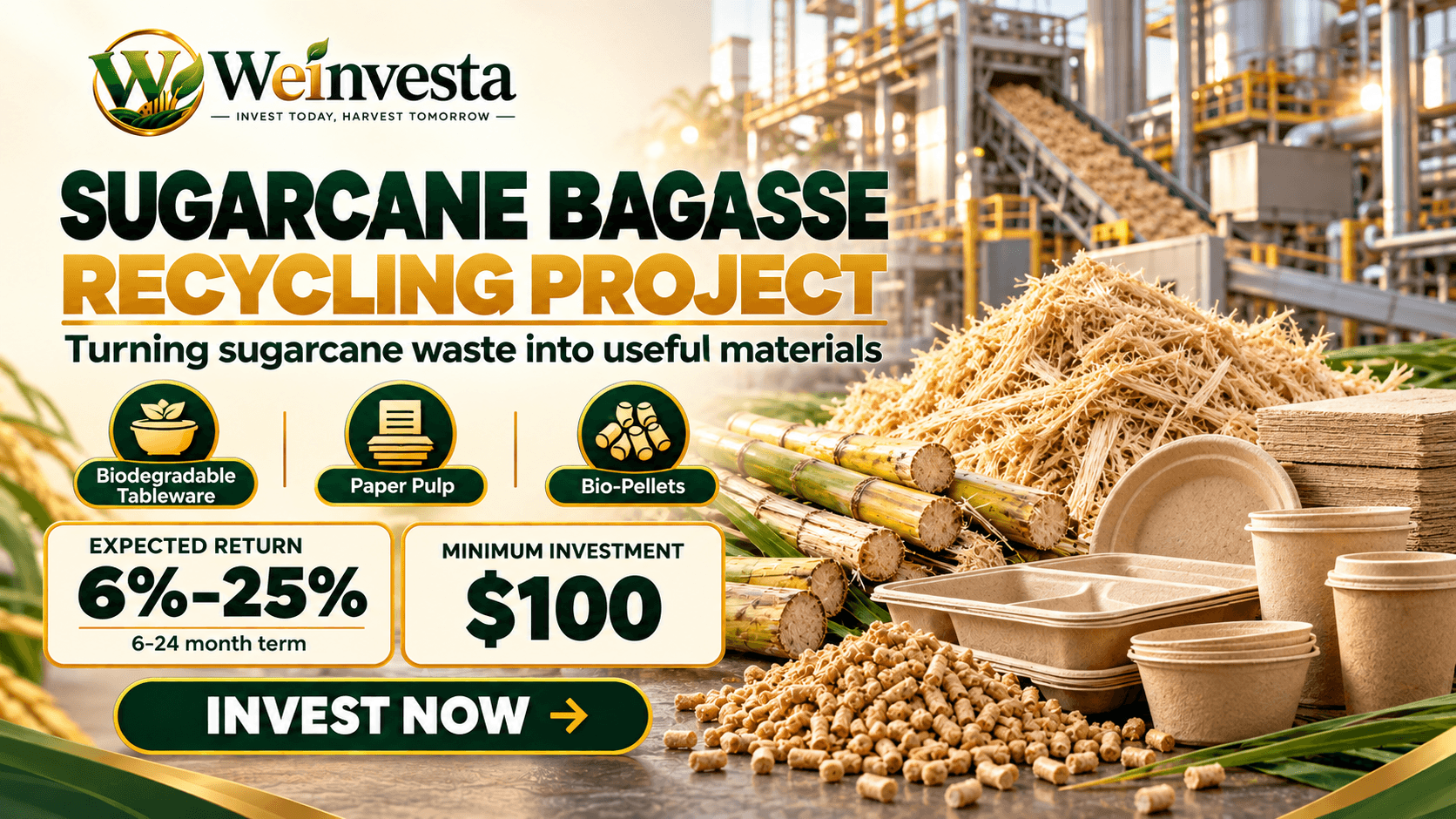
Sugarcane processing produces large quantities of bagasse—the dry, fibrous material left after juice is extracted from the cane. Although bagasse is often treated as agricultural waste, it can be processed into biodegradable tableware, paper pulp, packaging boards, and bio-pellets for industrial energy applications.
The Weinvesta Sugarcane Waste (Bagasse) Recycling Project proposes an integrated recycling facility designed to convert sugarcane-processing waste into commercially usable products.
The project belongs to the Recycling & Circular Economy sector, with planned operations across Brazil, India, Venezuela, Thailand, and China.
Project Overview
Category: Recycling & Circular Economy
Status: Active
Target Amount: $69,721.63
Displayed Return Range: 6%–25%
Available Terms: 6, 12, or 24 months
Displayed Investment Range: $100–$1,000,000
Payout Schedule: On maturity
Planned Countries: Brazil, India, Venezuela, Thailand, and China
Primary Products: Biodegradable tableware, paper pulp, packaging boards, and bio-pellets
Funding progress and investment terms may change. Review the live project page before making a decision.
What Is Sugarcane Bagasse?
Bagasse is the fibrous material remaining after sugarcane stalks are crushed to extract their juice. Sugar mills generate it continuously during the harvesting and processing season.
Instead of disposing of this material, a recycling facility can clean, dry, pulp, mold, press, sterilize, and package it for several commercial uses.
Potential products include:
Biodegradable plates, bowls, cups, and food containers
Molded takeaway packaging
Paper pulp
Packaging boards
Industrial fiber products
Biomass and bio-pellets
Fuel for selected industrial energy systems
How Will the Project Work?
The planned production process includes:
Collecting bagasse from sugarcane-processing facilities.
Controlling moisture and removing contaminants.
Drying and preparing the fiber.
Pulping the bagasse for paper and molded products.
Forming products through molding and pressing.
Cutting and finishing each item.
Sterilizing food-contact products.
Conducting quality inspections.
Packing finished products for distribution.
Processing selected material into bio-pellets.
The facility plans to begin with molded tableware and paper-pulp products before expanding into industrial packaging and energy-focused pellets.
Integration With Sugarcane Operations
The project is intended to work alongside sugarcane pressing operations connected to more than 5,000 hectares of agricultural activity.
Internal sourcing may help the project:
Access bagasse closer to the production point
Reduce raw-material purchasing costs
Improve supply traceability
Coordinate collection with milling schedules
Reduce agricultural waste
Create more value from each harvested sugarcane crop
Additional material may also be sourced from external sugar mills when commercially practical.
Potential Revenue Streams
Biodegradable Tableware
Molded plates, bowls, trays, and takeaway containers may be supplied to restaurants, cafés, food-service companies, supermarkets, and event businesses.
Paper Pulp
Processed bagasse pulp may be sold to manufacturers of paper, cartons, and fiber-based packaging.
Packaging Boards
Bagasse can be converted into boards for selected food, retail, and industrial packaging applications.
Bio-Pellets
Dry fiber can be processed into pellets for industrial heating or selected clean-energy applications.
Export Sales
Products that meet relevant quality, food-safety, and environmental standards may be supplied to international distributors and eco-packaging buyers.
Target Customers
The project’s commercial strategy targets:
Restaurants and cafés
Supermarkets and retail chains
Food-delivery and takeaway businesses
Eco-packaging distributors
Paper and packaging manufacturers
Hotels and institutional caterers
Importers and exporters
Industrial clean-energy buyers
Businesses replacing selected single-use plastics
Displayed Investment Options
6-Month Option
Displayed Total Profit: 6%
Lock Period: 6 months
Payout: On maturity
Displayed Range: $100–$1,000,000
12-Month Option
Displayed Total Profit: 13%
Lock Period: 12 months
Payout: On maturity
Displayed Range: $100–$1,000,000
24-Month Option
Displayed Total Profit: 25%
Lock Period: 24 months
Payout: On maturity
Displayed Range: $100–$1,000,000
These figures describe the plans displayed on the project page. They should not be interpreted as guaranteed future results.
🚀 View the related investment options
Why Is This a Circular-Economy Project?
The project seeks to keep agricultural material within the production cycle instead of treating it as waste.
Its circular model includes:
Recovering bagasse from sugarcane mills
Producing biodegradable alternatives to selected plastic products
Converting fiber into paper and packaging
Using lower-grade material for bio-pellets
Reducing agricultural-waste disposal
Creating several products from one feedstock
Explore other Recycling and Circular Economy projects.
Key Project Risks
Moisture-Control Failure
Bagasse with excessive moisture may develop mold, lose quality, or become difficult to process.
Inconsistent Fiber Quality
Fiber characteristics may vary according to the sugarcane variety, milling process, storage, and contamination levels.
Equipment Downtime
Failures involving pulping, molding, pressing, drying, or packaging equipment may interrupt production.
Buyer-Certification Delays
Food-contact and export buyers may require testing, factory audits, product certification, and compliance documents.
Price Competition
Bagasse products must compete with plastic, paper, bamboo, wood pulp, and other biodegradable alternatives.
Fire and Storage Risk
Dry bagasse is combustible and requires appropriate storage, ventilation, fire detection, and emergency controls.
Environmental Permitting
Industrial pulping, water use, wastewater management, and facility operations may require environmental approvals.
Seasonal Feedstock Availability
Sugarcane harvesting is seasonal, so the project must manage storage and external supply arrangements carefully.
Review the Weinvesta Risk Disclosure, Terms and Conditions, and project-specific documents before participating.
How to Explore the Project
Visit the Sugarcane Bagasse Recycling Project.
Review the business model, documents, and risks.
Compare the displayed 6-, 12-, and 24-month options.
Select an option aligned with your objectives and risk tolerance.
Create an account and complete verification if required.
Use the investment button under the relevant option.
Monitor available progress information through your account.
Read How Weinvesta Works for more information about the process.
Frequently Asked Questions
What is the project’s principal raw material?
Sugarcane bagasse left after juice extraction is the principal feedstock.
What products will the project produce?
The planned products include biodegradable tableware, paper pulp, packaging boards, and bio-pellets.
Which countries are included?
The project identifies Brazil, India, Venezuela, Thailand, and China.
What returns are displayed?
The current plan cards display 6% for 6 months, 13% for 12 months, and 25% for 24 months.
When are payouts scheduled?
The displayed options state that payouts are made on maturity.
Are the displayed returns guaranteed?
No. Project performance may be affected by feedstock quality, operating costs, demand, certification, equipment, regulation, competition, and other risks.
Explore the Sugarcane Bagasse Recycling Project
By converting sugarcane waste into packaging, paper products, biodegradable tableware, and bio-pellets, the project aims to create commercial value from an agricultural byproduct.
Ready to Grow Your Wealth?
Put your capital behind real-world projects with real assets behind them.