
Scrap Metal Recycling Project | Heavy Industry & Metals | WeInvesta
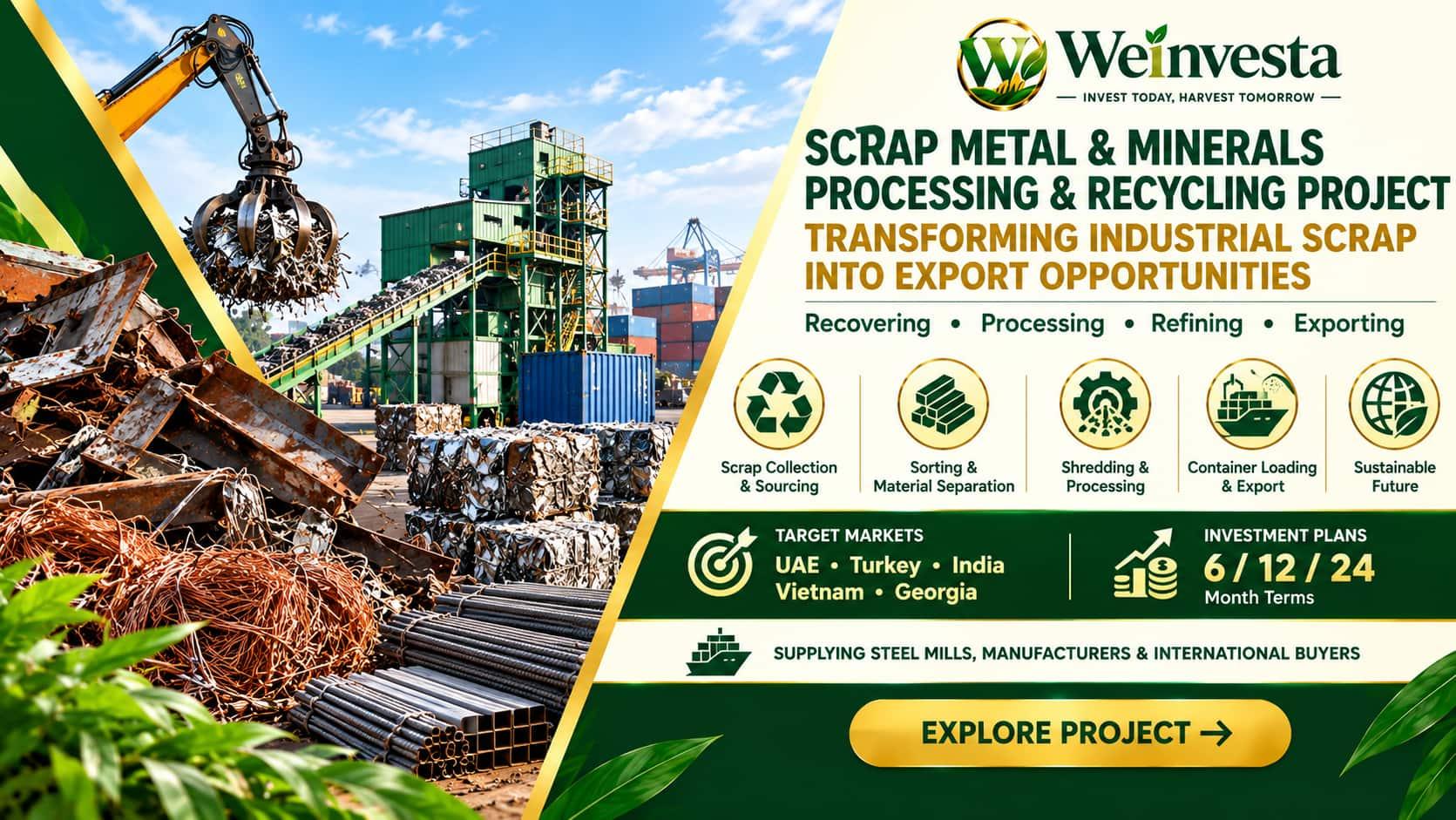
Industrial manufacturing and construction depend on reliable supplies of metal raw materials. At the same time, discarded metal from industrial, commercial, and construction activities can retain significant material value when it is properly collected, sorted, and processed.
WeInvesta’s Scrap Metal & Minerals Processing & Recycling Project proposes an industrial recycling operation focused on purchasing scrap metal, sorting and processing it, shredding suitable light scrap, preparing containerized shipments, and supplying standardized materials to repeat manufacturing and export buyers.
The project focuses on recovering and processing both ferrous and non-ferrous metals. Its proposed commercial model aims to turn fragmented local scrap collection into more standardized, export-ready material that can meet buyer specifications and support recurring shipment activity.
The project identifies the United Arab Emirates, Turkey, India, Vietnam, and Georgia as target markets. Its planned customer base includes steel re-rolling mills, construction-related businesses, manufacturing customers, and international buyers.
The initiative is designed as an industrial recycling and trading operation in which commercial performance depends on sourcing suitable scrap at competitive prices, processing it efficiently, maintaining material quality, and completing repeat sales and export shipments.
Interested in exploring this opportunity?
Review the official project information, applicable investment terms, supporting documents, and risk disclosures before making an investment decision.
Why Scrap Metal Recycling Matters
Metals are important inputs for manufacturing, construction, and industrial production. Recycling suitable scrap can return usable materials to industrial supply chains rather than leaving them unused or requiring all material demand to be met through newly produced metal.
The proposed project aims to create value through the collection, sorting, processing, and resale of scrap metals.
Its intended commercial and operational advantages include:
Recovering reusable materials: Sorting and processing can help separate ferrous and non-ferrous metals into more marketable categories.
Supplying manufacturing customers: Processed materials may be sold to steel re-rolling mills and other industrial buyers.
Supporting construction supply chains: Suitable processed scrap may serve buyers connected to construction and metal production.
Preparing material for export: Standardized sorting, shredding, and container loading are intended to make shipments more suitable for international buyers.
Developing repeat business: The project aims to establish ongoing relationships with buyers who require recurring supplies of processed scrap.
Improving material value: Processing light scrap through a medium-size shredder may increase its resale value, depending on material quality and market conditions.
The actual commercial value of recovered materials will depend on metal prices, scrap quality, contamination levels, processing costs, buyer specifications, and transportation expenses.
How the Project Is Planned to Operate
The proposed operating model follows a sequence from scrap purchasing to processing, quality preparation, container loading, and export.
1. Scrap Purchasing and Sourcing
The business plans to purchase scrap metal from local collection and supply channels. Its objective is to consolidate fragmented scrap supplies into larger, more standardized batches suitable for industrial customers.
Reliable sourcing will be important. The quality, type, quantity, and purchase price of scrap can directly affect the project's operating margins and its ability to meet buyer requirements.
2. Sorting and Material Separation
Collected scrap will be sorted to separate ferrous and non-ferrous metals and identify material categories suitable for different buyers.
Sorting is an important stage because buyers may apply different specifications for metal type, dimensions, contamination, and material quality.
The project plans to use dedicated sorting equipment and an industrial recycling yard to support these activities.
3. Shredding and Processing
A medium-size shredder is included in the proposed equipment plan to process suitable light scrap.
Shredding is intended to make certain materials easier to handle, transport, and sell. The business plan identifies this equipment choice as a way to increase the resale value of light scrap while limiting the initial capital burden compared with a larger shredding setup.
The final resale value will depend on processed material quality, buyer requirements, operating efficiency, and commodity prices.
4. Quality Approval and Preparation for Shipment
The first shipment may require approximately 60 days for buyer quality approval, according to the supplied business plan.
This initial approval stage is important because international buyers may inspect or evaluate material before confirming recurring purchase arrangements.
Once buyer quality approval has been obtained, the project targets shipment cycles of approximately 30–40 days.
These are proposed operating targets, not guaranteed delivery schedules.
5. Container Loading and Export
After sorting and processing, suitable scrap will be prepared for containerized shipments.
The business plan identifies strategic containerized export shipping arrangements and repeat buyer agreements as important parts of the commercial strategy.
Container availability, shipping documentation, port operations, customs procedures, and international logistics will all influence the timing and cost of exports.
Business Model and Revenue Opportunities
The project's business model is based on purchasing scrap metal, improving its marketability through sorting and processing, and selling the resulting materials to industrial and export buyers.
Scrap purchasing and resale: The business aims to purchase scrap at competitive prices and generate revenue through the difference between purchasing and selling prices, after accounting for processing, handling, transport, and other operating costs.
Supply to steel re-rolling mills: Steel re-rolling mills are identified as potential industrial buyers for suitable processed metal materials.
Construction-related demand: The project also targets businesses connected to construction and industrial material supply chains.
Non-ferrous metal recovery: Separating non-ferrous metals may provide additional resale opportunities, depending on the materials recovered and their market prices.
Containerized exports: The project plans to standardize and prepare scrap for international shipment, with the aim of developing recurring sales to repeat buyers.
Recurring shipment cycles: Following initial buyer quality approval, the project targets 30–40-day shipment cycles and a monthly export volume of approximately 5,000 tons.
The project is positioned in the supplied business plan as a potential early cash-flow operation within the wider portfolio. However, actual cash flow will depend on working capital availability, purchasing prices, sales margins, shipment volumes, buyer payments, and operating performance.
Target Markets
The project information identifies the following target markets:
United Arab Emirates (UAE)
Turkey
India
Vietnam
Georgia
These are the markets listed in the supplied project information. Actual export activity will depend on buyer agreements, material specifications, applicable export and import regulations, documentation, container availability, and shipping arrangements.
Project Snapshot
Project detailListed informationProject nameScrap Metal & Minerals Processing & Recycling ProjectCategoryHeavy Industry & MetalsStatusActiveTarget marketsUAE, Turkey, India, Vietnam, GeorgiaCampaign targetUS$149,403.49Raised so farUS$0Total investors0Funding progress0%Displayed expected return31%Displayed duration24 monthsDisplayed lock period2 yearsEstimated total project investment requirementUS$5 million–US$6 million
The campaign target of US$149,403.49 differs significantly from the estimated total project investment requirement of US$5 million–US$6 million. Prospective investors should review the official project documentation to understand how the campaign target relates to the wider project funding requirement.
Explore the Available Investment Plans
The detailed investment-plan cards list the following options:
Lock periodListed total profit ratePayout6 months8%At maturity12 months16%At maturity24 months31%At maturity
The detailed plan cards show an investment range of US$100–US$1,000,000, with a 0% instant bonus.
However, the general investment-terms section lists a US$1,000 minimum investment, a 24-month lock-in period, and a 19% target total profit. These figures differ from the detailed plan cards, which show 8%, 16%, and 31% for the respective investment periods.
The project summary also displays an expected return of 31% over 24 months.
The applicable minimum investment, lock period, total profit rate, and payout terms should be confirmed through the official project documentation and platform terms before publication or investment. Listed rates are not a guarantee of performance, profit, or timely payment.

Ready to Grow Your Wealth?
Put your capital behind real-world projects with real assets behind them.