
Global Digital Banking & Money Transfer Project | WeInvesta
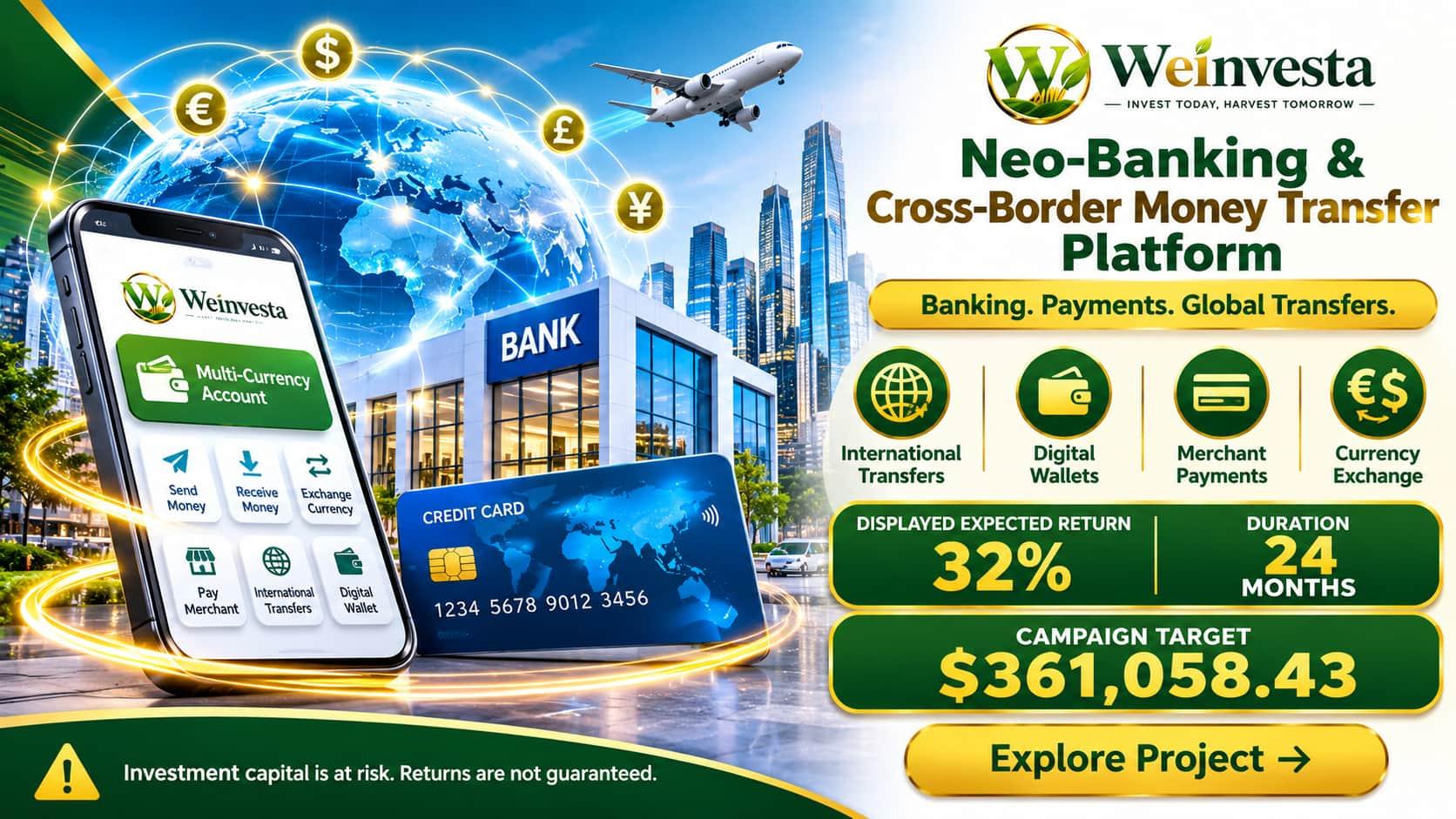
Money moves across borders every day. Businesses pay international suppliers, freelancers receive payments from overseas clients, travelers manage different currencies, and families send money to relatives in other countries.
These transactions require financial systems that can connect different markets, currencies, customers, and payment networks.
WeInvesta's Neo-Banking & Cross-Border Money Transfer Platform is a proposed fintech initiative designed to develop a connected digital financial ecosystem. The project focuses on international remittances, money exchange, digital wallets, multi-currency accounts, merchant payments, and business transactions.
Its target users include non-resident customers, freelancers, travelers, medical tourists, merchants, and people who regularly use international financial services.
The aim is to bring several financial tools into one digital platform and support easier access to cross-border financial services.
Understanding the Global Finance Opportunity
Traditional financial services can involve multiple institutions, payment arrangements, currency conversions, and verification procedures.
Digital financial platforms aim to connect these activities through mobile technology and integrated payment infrastructure.
The proposed WeInvesta platform focuses on three important areas:
1. Digital Banking and Wallet Infrastructure
Digital banking platforms allow customers to access financial tools through online and mobile services.
The project plans to develop multi-currency accounts and digital wallets that can help users manage their financial activity through a connected platform.
Planned features include digital account tools, wallet services, and business currency exchange facilities.
The availability and functionality of these services will depend on the platform's development, financial partners, and applicable regulatory approvals.
2. International Remittance and Cross-Border Payments
International money transfers are important for individuals and businesses operating in different countries.
The project aims to support remittance corridors and international payment services for customers who need to send or receive money across borders.
Its proposed customer groups include:
Freelancers receiving payments from international clients.
Non-resident customers managing money between countries.
Travelers who need access to currency exchange and payment services.
Medical tourists making payments across borders.
Businesses settling payments with international suppliers and partners.
The planned services will depend on supported payment corridors, banking relationships, compliance requirements, and operational arrangements.
3. Merchant and Business Payment Solutions
Businesses need reliable ways to receive payments and settle transactions with customers and suppliers.
The platform plans to develop merchant payment gateways and business settlement services to support digital commerce and international transactions.
These services are intended to create additional commercial opportunities beyond individual money transfers.
A Step-by-Step Platform Development Plan
A key part of the project's strategy is its two-phase development approach.
Rather than beginning with a fully independent banking structure, the project proposes an initial partnership model followed by potential licensing expansion.
Phase 1: Building Through a Licensed Financial Partner
The first phase focuses on developing the core platform and entering the market through a licensed partner.
Planned development areas include:
Mobile application development.
Customer identity verification through KYC.
Anti-Money Laundering (AML) monitoring.
Partner-based card issuing arrangements.
Remittance network integration.
International payment connectivity.
Customer support operations.
Compliance monitoring and transaction controls.
Working with a licensed partner is intended to provide an initial operating framework while the platform develops its own customer base.
The actual launch and availability of services will depend on finalized partner agreements, regulatory permissions, technical integration, and compliance requirements.
Phase 2: Independent Licensing and Financial Expansion
The second phase proposes a move toward independent licensing after the platform establishes customer traction and develops sufficient compliance capabilities.
Planned activities include:
Pursuing relevant independent financial licences.
Meeting regulatory capital requirements.
Establishing treasury management infrastructure.
Developing controls for microfinance products.
Expanding the wider digital banking system.
This phase represents a longer-term development objective rather than a guaranteed outcome. Progress will depend on regulatory approval, funding, and operational readiness.
How the Platform Could Generate Revenue
The commercial strategy is designed around several potential financial service revenue streams.
Revenue ChannelHow It May Generate RevenueInternational RemittanceFees from processing cross-border transfersCurrency ExchangeSpreads from foreign exchange transactionsDebit Card InterchangeRevenue associated with eligible card transactionsATM ServicesApplicable ATM transaction feesMerchant PaymentsFees from merchant payment processing and settlementsDigital WalletsRevenue from wallet-related servicesFreelancer PaymentsFees for processing international freelancer payoutsMicrofinanceInterest income from compliant micro-loan products, subject to approvals
The project aims to combine multiple financial services rather than depend on a single transaction type.
However, these are proposed revenue channels. Actual income will depend on customer activity, transaction volumes, pricing, partnerships, regulatory permissions, and operating costs.
An Additional Feature: Emergency Micro-Loan Access
The project description also includes a proposed emergency micro-loan facility for active investors.
Eligible investors may be able to access emergency loans of up to 80% of their invested principal while their investment remains locked.
This facility is subject to credit checks and compliance requirements.
It is important to understand that this is a proposed lending facility, not a guaranteed loan or a way to withdraw locked investment capital. Loan approval, eligibility, repayment conditions, fees, and applicable regulations should be reviewed before relying on this feature.
Project Investment Overview
Project DetailInformationProject NameNeo-Banking & Cross-Border Money Transfer PlatformCategoryFintech & PaymentsMarketGlobal (Digital)StatusActiveDisplayed Expected Return32%Displayed Duration24 MonthsCampaign Target$361,058.43Raised So Far$0.00Total Investors0Funding Progress0%Main Lock Period2 YearsEstimated Project RequirementUS$10.50M–US$14.50M
Available Investment Periods
The project page displays three investment options:
Investment PeriodDisplayed Fixed RateInvestment RangePayout6 Months8%$100–$1,000,000At maturity12 Months16%$100–$1,000,000At maturity24 Months32%$100–$1,000,000At maturity
The displayed instant bonus is 0%, with payouts scheduled at maturity.
Important: Understanding the Investment Terms
The general investment terms separately state:
Minimum investment: $1,000 USD.
Lock-in period: 24 months.
Target total profit: 20%.
However, the displayed investment cards show a minimum of $100, with 6-, 12-, and 24-month options offering 8%, 16%, and 32%, respectively.
These differences should be clarified through the official project documents before an investment is made. Do not assume that the headline figures and investment-plan figures have identical contractual conditions.
What Investors Should Review
A digital financial platform requires more than a functional application. It also needs reliable financial partners, strong security, regulatory approval, and a sustainable commercial model.
Before considering the project, review:
Regulatory Structure: Understand how the licensed partner will support the first phase and what approvals may be needed for independent operations.
Technology and Security: Review the proposed systems for customer verification, transaction monitoring, data protection, and cybersecurity.
Business Partnerships: Examine the financial institutions, card providers, payment networks, and other partners required for the planned services.
Revenue Model: Understand how remittance fees, currency exchange, merchant services, and other activities may contribute to revenue.
Investment Conditions: Confirm the minimum amount, lock-in period, payout conditions, and applicable profit calculation.
Exit and Liquidity: Understand when funds may become available and what restrictions apply during the investment period.
WeInvesta's project documents and Risk Disclosure should be reviewed carefully before making a decision.
Risks Associated with Digital Financial Platforms
Fintech businesses operate in a competitive environment with significant technical, financial, and regulatory responsibilities.
The project identifies several risks that prospective investors should understand:
Regulatory and Licensing Risks: Required approvals may take longer than expected or may not be granted.
Partner Dependency: Initial services may rely on licensed financial partners. A change in partnership could affect operations.
Compliance Risks: Weak KYC, AML, or sanctions screening procedures may create regulatory problems.
Cybersecurity Risks: Hacking, system vulnerabilities, and unauthorized access may affect the platform.
Fraud and Chargebacks: Fraudulent payments and transaction disputes may cause losses.
Data Privacy Risks: Customer information must be protected against unauthorized access or misuse.
Liquidity Risks: Financial obligations and transaction demands may create pressure on available funds.
Customer Protection Risks: Complaints, disputes, or service failures may result in legal and regulatory claims.
Lending Restrictions: The availability of micro-loans and other financial products may depend on specific licensing and regulatory requirements.
Investors should not rely only on displayed returns or proposed platform features when assessing the project.
Connecting People, Businesses, and Global Payments
Digital finance is becoming an important part of international commerce and everyday transactions.
Through its proposed combination of digital wallets, money exchange, remittance services, merchant payments, and cross-border business settlements, WeInvesta's fintech project aims to create a connected financial service platform.
Its long-term development will depend on the successful implementation of its technology, financial partnerships, regulatory framework, and customer acquisition strategy.
Explore the Project
Learn more about the proposed Neo-Banking & Cross-Border Money Transfer Platform and review its development plans, investment options, and supporting documents.
Explore the Neo-Banking Project →
Discover All Fintech Projects →
You can also create a WeInvesta account after reviewing the relevant investment conditions and project information.

Ready to Grow Your Wealth?
Put your capital behind real-world projects with real assets behind them.