
Sugarcane Bagasse Recycling Project | WeInvesta
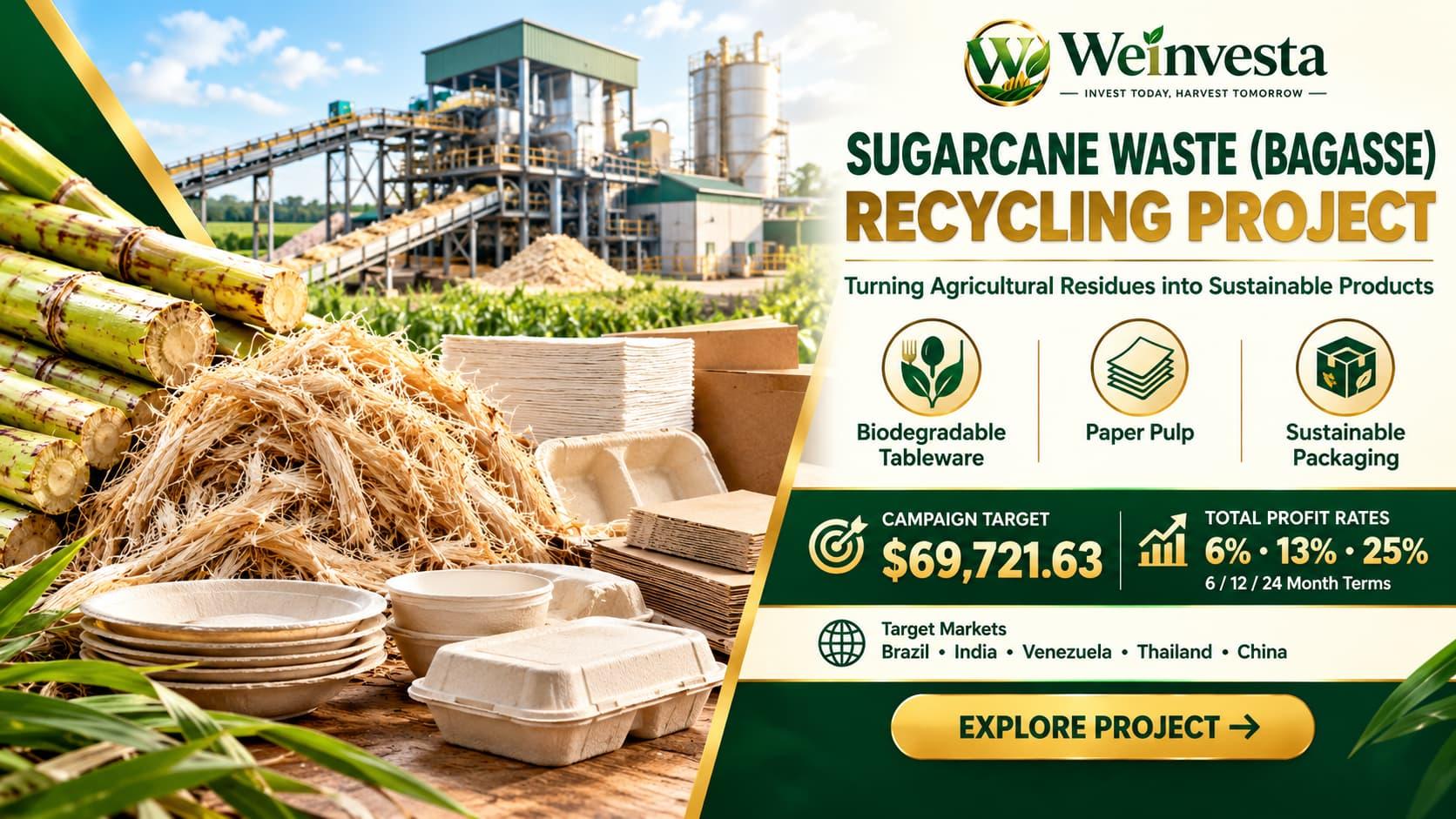
Sugarcane processing generates substantial quantities of fibrous residue known as bagasse. Instead of treating this material solely as waste, recycling operations can process it into useful materials for packaging, paper manufacturing, food service products, and certain industrial energy applications.
The Sugarcane Waste (Bagasse) Recycling Project aims to create commercial value from this agricultural byproduct through a planned facility for drying, pulping, molding, pressing, cutting, sterilizing, and packaging.
The project targets Brazil, India, Venezuela, Thailand, and China, with a business model focused on collecting sugarcane bagasse and converting it into products for customers seeking alternative materials and resource-efficient manufacturing solutions.
The initiative is positioned within the circular economy, where materials are recovered and reused to help reduce waste and support more efficient resource utilization.
What Is Sugarcane Bagasse?
Bagasse is the fibrous material that remains after sugarcane stalks are crushed to extract their juice. Depending on its quality and processing requirements, this residue can serve as a raw material for several products.
Potential applications include:
Molded tableware and food-service products
Paper pulp and paper-based materials
Packaging boards and protective packaging
Bio-pellets for suitable industrial energy applications
By developing processing capacity around these applications, the project aims to create additional commercial uses for a material generated by the sugarcane industry.
The suitability of bagasse for each product depends on fiber characteristics, moisture content, processing methods, technical specifications, and buyer requirements.
How the Project Is Planned to Operate
1. Feedstock sourcing
The project plans to obtain bagasse from sugarcane pressing operations and external sugar mills. Its supplied project description identifies connections with sugarcane operations across more than 5,000 hectares of farmland.
Consistent sourcing and appropriate storage are important because bagasse quality and moisture can influence processing efficiency and final product quality.
2. Drying and preparation
Collected material will be prepared for processing, including moisture management and other handling requirements. Effective drying and storage practices are important for operational reliability and reducing material deterioration.
3. Pulping and material processing
Processing equipment will prepare suitable bagasse fibers for conversion into pulp and other material formats. The chosen process will depend on the intended product and its required specifications.
4. Molding, pressing, and cutting
The planned production lines will form and shape processed material into products such as molded tableware and packaging components. Product dimensions, consistency, strength, and finish will affect commercial acceptance.
5. Sterilization, packaging, and distribution
Where required by the product and its intended use, appropriate treatment and quality-control procedures will be incorporated before packaging and distribution.
The project's initial focus is on molded tableware and pulp products, followed by potential expansion into bio-pellets and industrial packaging materials.
Business Model and Revenue Opportunities
The commercial strategy is designed to serve buyers that need fiber-based products and alternative packaging materials.
Potential customer segments include:
Restaurants, catering businesses, and food-service suppliers
Supermarkets and retailers
Paper and packaging manufacturers
Eco-packaging distributors
Exporters and institutional buyers
Industrial customers seeking suitable biomass-based fuel alternatives
The project intends to use sourcing relationships with sugarcane processing operations to support raw-material availability and manage input costs. Additional supply may be obtained from external mills.
Commercial performance will depend on production efficiency, product quality, manufacturing costs, buyer qualification, distribution arrangements, and the ability to compete with conventional plastic and other packaging materials.
Supporting the Circular Economy
The circular economy emphasizes recovering useful materials and extending their productive value instead of discarding them after their initial use.
Bagasse recycling creates the possibility of converting a byproduct of sugarcane processing into marketable materials for several industries. Depending on the production system, the approach may help diversify agricultural value chains and support activities in collection, transportation, processing, packaging, and distribution.
The project's environmental benefits will depend on the actual manufacturing process, energy consumption, water use, waste management, and the suitability of the resulting products for their intended applications.
Project Snapshot
Project detailSupplied informationProject nameSugarcane Waste (Bagasse) Recycling ProjectCategoryRecycling & Circular EconomyStatusActiveTarget marketsBrazil, India, Venezuela, Thailand, ChinaCampaign targetUS$69,721.63Raised so farUS$0Funding progress0%Displayed expected return25%Displayed duration24 monthsDisplayed lock period2 yearsEstimated total investment requirementUS$1.80M–US$2.80M
Investment Plans
The detailed investment-plan cards supplied for this project list three options:
Lock periodListed total profit ratePayout timing6 months6%At maturity12 months13%At maturity24 months25%At maturity
The detailed cards list an investment range of US$100 to US$1,000,000, with a 0% instant bonus.
The project's general investment-terms section separately lists a US$1,000 minimum investment, an 18-month lock-in period, and a 15% target total profit. These figures differ from the detailed plans and should be confirmed against the official terms before publication.
The rates above reflect the supplied project information and must not be interpreted as a guarantee of investment performance. Prospective investors should review the official documentation, applicable terms, and risk disclosures before investing.
Key Risks and Considerations
The project may face operational, commercial, and supply-chain risks, including:
Inconsistent bagasse quality and moisture-control problems
Seasonal fluctuations in feedstock availability
Equipment downtime, maintenance requirements, and production interruptions
Storage and fire risks associated with handling fibrous material
Delays in buyer certification or product qualification
Price competition from plastic products and other packaging alternatives
Environmental permits and operating requirements
Transportation, warehousing, and distribution costs
Reliable sourcing arrangements, suitable storage facilities, effective quality control, machinery maintenance, and diversified customer relationships will be important to the project's execution.
The availability of bagasse from internal operations does not eliminate the risks associated with seasonal supply, material quality, storage, or external sourcing.
Explore WeInvesta's Project Information
Readers interested in the project can review WeInvesta's general project information and available documentation.

Ready to Grow Your Wealth?
Put your capital behind real-world projects with real assets behind them.