
Intelligent Mobility & AI Urban Infrastructure | WeInvesta
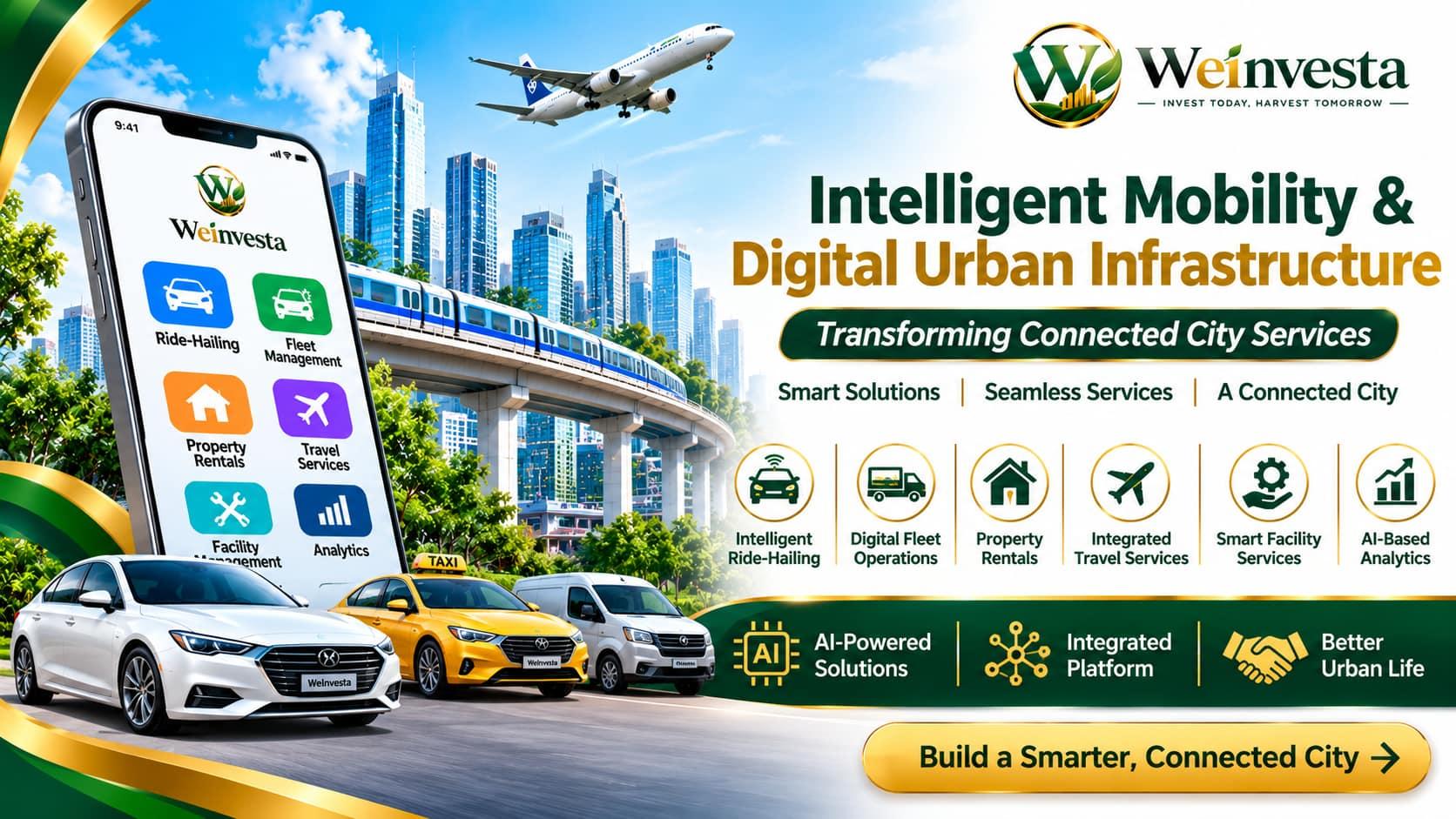
The development of modern cities increasingly depends on efficient transportation, accessible services, and connected digital infrastructure. As urban populations and commercial activities grow, the coordination of mobility, accommodation, travel, and facility services becomes increasingly important.
Digital platforms are changing how these services are accessed and managed. Mobile applications allow customers to request transportation, arrange accommodation, make reservations, and connect with service providers without relying entirely on traditional service channels.
WeInvesta's AI-Driven Smart Urban Service Platforms project aims to bring these activities together through an integrated collection of AI-powered mobile applications.
The proposed ecosystem combines ride-hailing, fleet management, short-term rental booking, travel services, and on-demand facility management. Its technology infrastructure is designed around intelligent routing, dynamic pricing, automated booking engines, digital payments, and operational analytics.
Through this integrated approach, the project seeks to develop a connected digital service environment with multiple commercial applications.
Why Intelligent Mobility and Digital Service Integration Matter
Urban transportation and service industries involve complex interactions between customers, operators, vendors, and businesses. Managing these activities through disconnected systems can create operational challenges, inconsistent service experiences, and difficulties in coordinating demand.
Digital integration provides an opportunity to connect different service categories through centralized applications and coordinated technology infrastructure.
Artificial intelligence can further support these operations by analyzing service demand, assisting with route selection, supporting automated matching, and providing information for pricing and resource allocation.
The project's core focus includes:
Intelligent Transportation Services: Connecting passengers and drivers through digital ride-hailing applications, smart matching, and AI-supported routing.
Digital Fleet Operations: Providing tools for fleet monitoring, vehicle coordination, operational subscriptions, and transportation management.
Property Rental Platforms: Supporting short-term rental reservations through digital booking systems connecting property owners and customers.
Integrated Travel Services: Developing digital solutions that support travel-related bookings and mobility requirements.
Smart Facility Services: Connecting residential and commercial customers with on-demand facility management providers.
AI-Based Business Analytics: Using operational data and analytics dashboards to support business monitoring, pricing decisions, and service optimization.
Project Overview
The project is designed to develop a unified digital platform infrastructure that supports multiple service categories through modular applications and integrated technology systems.
Its planned development includes mobile applications, AI-powered routing, booking engines, vendor onboarding systems, digital payment infrastructure, customer support, business analytics, and compliance controls.
The proposed ecosystem is intended to connect individual consumers, transportation operators, property owners, service vendors, and commercial organizations.
The planned infrastructure and operational capabilities include:
1. Intelligent Ride-Hailing and Mobility Applications
The project plans to develop ride-hailing applications that use AI-supported routing, driver-passenger matching, and dynamic pricing mechanisms.
These systems are intended to help coordinate transportation requests, identify available service providers, and support efficient route selection.
Intelligent matching and pricing technologies may also help platform operators respond to changes in transportation demand and service availability.
2. Digital Fleet Operations and Subscription Management
Fleet management represents an important part of the project's proposed digital ecosystem.
The platform plans to incorporate tools that support vehicle monitoring, fleet coordination, operational management, and subscription-based services for fleet operators.
These solutions are intended to support transportation businesses seeking digital tools to organize vehicle operations and manage service activities.
3. Digital Property Rentals and Reservation Systems
The project also includes short-term rental booking services.
Through digital applications and booking engines, the proposed platform aims to connect property owners with customers seeking temporary accommodation.
Integrated booking and payment capabilities are intended to support reservation management and provide a coordinated digital experience for customers and service providers.
4. Travel and Connected Mobility Services
Travel-related services form another component of the proposed ecosystem.
The project aims to integrate digital tools that support travel bookings and mobility requirements, allowing customers to access connected services through a unified platform environment.
This approach is intended to complement the project's transportation and rental service categories.
5. On-Demand Facility Management Solutions
Residential and commercial properties require access to different facility-related services.
The project plans to develop on-demand applications that connect customers with relevant facility service providers.
These digital solutions are intended to support service requests, booking coordination, and operational management for residential and commercial environments.
6. Integrated Payments, AI Routing, and Operational Analytics
The project's technical development strategy includes several supporting systems designed to connect the different service categories.
These include:
AI-powered routing and optimization infrastructure.
Digital booking and reservation engines.
Payment system integration.
Vendor and service-provider onboarding.
Customer service and support infrastructure.
Operational analytics and reporting dashboards.
Compliance and data protection controls.
Together, these components are intended to provide the technological foundation required to manage the proposed digital service ecosystem.
Business and Commercial Strategy
The project's commercial strategy focuses on generating revenue through platform-based transactions, subscriptions, commercial agreements, and specialized digital services.
Its planned revenue opportunities include:
Transportation Transaction Commissions: Revenue from ride-hailing bookings and completed transportation services through the platform.
Rental Reservation Commissions: Commission-based income opportunities from short-term rental reservations and property booking transactions.
Fleet Management Subscriptions: Recurring subscription opportunities from vehicle fleet operators and commercial transportation businesses using the platform's management tools.
Facility Management Bookings: Revenue opportunities from residential and commercial customers booking facility-related services.
Featured Service Listings: Promotional placement opportunities for property owners, vendors, and service providers seeking increased visibility.
Travel Service Transactions: Potential commissions from travel-related bookings and connected mobility services.
Enterprise Technology and B2B Contracts: Commercial revenue opportunities from specialized digital tools, enterprise services, operational solutions, and business technology agreements.
The project also plans to use data analytics to evaluate service demand, improve pricing decisions, and support operational efficiency.
Its city-by-city launch strategy is designed to manage operating expenditure, assess local market requirements, and support gradual expansion rather than launching across multiple markets simultaneously.
Key Investment Highlights
The project's stated investment highlights include:
AI-supported transportation routing and intelligent service matching.
Dynamic pricing systems designed to respond to changing demand.
Integrated ride-hailing and digital mobility applications.
Fleet monitoring and subscription-based management solutions.
Short-term property rental booking infrastructure.
Digital travel and mobility service integration.
On-demand residential and commercial facility management.
Multiple planned revenue channels across platform commissions and subscriptions.
Enterprise technology solutions and B2B service agreements.
Modular application development with a phased city-by-city launch strategy.
These are proposed project capabilities and commercial objectives. Actual results will depend on technology development, implementation, customer adoption, market competition, and operational performance.
Project Markets
The project is positioned as a global digital technology initiative.
Its proposed platform is intended to serve several customer and business segments:
Urban Consumers: Individuals seeking convenient access to transportation, accommodation, and everyday services.
Property and Rental Businesses: Property owners and operators interested in digital reservation and rental management solutions.
Transportation Businesses: Drivers, fleet operators, and commercial transportation providers requiring digital coordination tools.
Commercial Organizations: Businesses seeking facility management services, enterprise tools, and operational support.
Tourism and Travel Customers: Customers requiring connected travel, mobility, and short-term rental services.
Digital Service Providers: Vendors and service operators participating in the platform's proposed service network.
The project's expansion strategy is based on launching services city by city. Specific launch cities and individual operating countries have not been identified in the supplied project information.
Project Snapshot
The project details and current funding information are presented below:
Project Name: AI-Driven Smart Urban Service Platforms
Category: AI & Technology
Project Location: Global (Digital)
Project Status: Active
Displayed Expected Return: 35%
Displayed Duration: 24 Months
Campaign Target Amount: $99,602.32
Raised So Far: $0.00
Total Investors: 0
Funding Progress: 0%
Headline Lock Period: 2 Years
Estimated Project Requirement: US$2M–US$4M
Displayed Investment Plans
The project page presents three investment-plan options:
Lock Period: 6 Months
Displayed Fixed Rate: 9%
Investment Range: $100–$1,000,000
Lock Period: 12 Months
Displayed Fixed Rate: 18%
Investment Range: $100–$1,000,000
Lock Period: 24 Months
Displayed Fixed Rate: 35%
Investment Range: $100–$1,000,000
Payout Schedule: At maturity.
Instant Bonus: 0%.
Important: Please review the investment terms carefully.
The project overview separately states the following:
Minimum Investment: $1,000.
Lock-in Period: 24 Months.
Target Estimated Growth: 22%.
These figures differ from the investment-plan cards, which display a $100 minimum investment, 6-, 12-, and 24-month terms, and fixed rates of 9%, 18%, and 35%.
The minimum investment shown in this blog's call to action is $100. Investors should consult the latest official project documents and confirm the applicable terms before making an investment decision.
Project Documents and Transparency
Before considering an investment, review the available project information and supporting documents:
WeInvesta Whitepaper
Sector-by-Sector Projects Profile
Business Plan
Investment Prospectus & Risk Overview
Risk Disclosure
These materials are intended to provide information about the project's proposed technology infrastructure, development strategy, business model, investment structure, and associated risks.
Reviewing the available documentation is an important step in understanding the project's objectives and evaluating the applicable investment conditions.
Risks and Important Considerations
Developing and operating an integrated AI-powered urban service platform involves several commercial, technological, operational, and regulatory risks.
These may include:
Market Competition: Established transportation, rental, travel, and facility management platforms may create significant competitive pressure.
Technology Development Costs: Building and maintaining multiple applications, AI systems, booking infrastructure, and payment integrations may require substantial investment.
Customer Acquisition Expenses: Marketing and user acquisition costs may affect operating expenditure and the platform's ability to achieve sustainable growth.
Service Provider Availability: Insufficient drivers, fleet operators, vendors, or property listings may affect service coverage and customer experience.
AI System Reliability: Inaccurate routing, matching recommendations, or dynamic pricing calculations may create operational inefficiencies.
Cybersecurity and Data Privacy: Digital platforms handling customer information and payment-related processes may face security threats and data protection obligations.
Regulatory Requirements: Transportation, property rentals, digital payments, and facility services may be subject to different legal requirements across markets.
Customer Adoption: Slower-than-expected platform adoption may limit bookings, transactions, and subscription revenue.
Commercial Partnership Risks: Delays in establishing vendor relationships and enterprise agreements may affect the development of planned revenue channels.
Monetization Delays: Revenue generation may take longer than anticipated while the platform develops its technology and establishes an active customer and provider network.
Investors should carefully review the project's risk disclosure and understand that projected returns are not guaranteed.
Developing the Next Generation of Connected Urban Services
The digital transformation of urban services creates opportunities to connect transportation, property rentals, travel, and facility management through integrated technology platforms.
WeInvesta's AI-Driven Smart Urban Service Platforms project aims to bring these service categories together through artificial intelligence, digital applications, automated booking infrastructure, and data-driven operational systems.
By developing multiple potential revenue channels and pursuing a phased expansion strategy, the initiative seeks to establish a connected service ecosystem that can address different consumer and commercial requirements.
Invest Now — Starting from $100
Explore the AI-Driven Smart Urban Service Platforms project and review the available investment plans.
Minimum Investment: $100
Invest Now — View Project Details
Review the investment terms, project documents, and risk disclosure before making an investment decision.
More From the Blog
Nov 17, 2026
Agri-Waste & Bio-Energy Recycling Investment | Sustainable Green Energy Project – WeInvesta
Read MoreNov 17, 2026
الاستثمار في إعادة تدوير المخلفات الزراعية والطاقة الحيوية | مشروع الاقتصاد الدائري المستدام – WeInvesta
Read MoreNov 17, 2026
কৃষি বর্জ্য রিসাইক্লিং ইনভেস্টমেন্ট | Bio-Energy ও Circular Economy Project – WeInvesta
Read More
Ready to Grow Your Wealth?
Put your capital behind real-world projects with real assets behind them.