
CPG Branding & Distribution Investment | Weinvesta
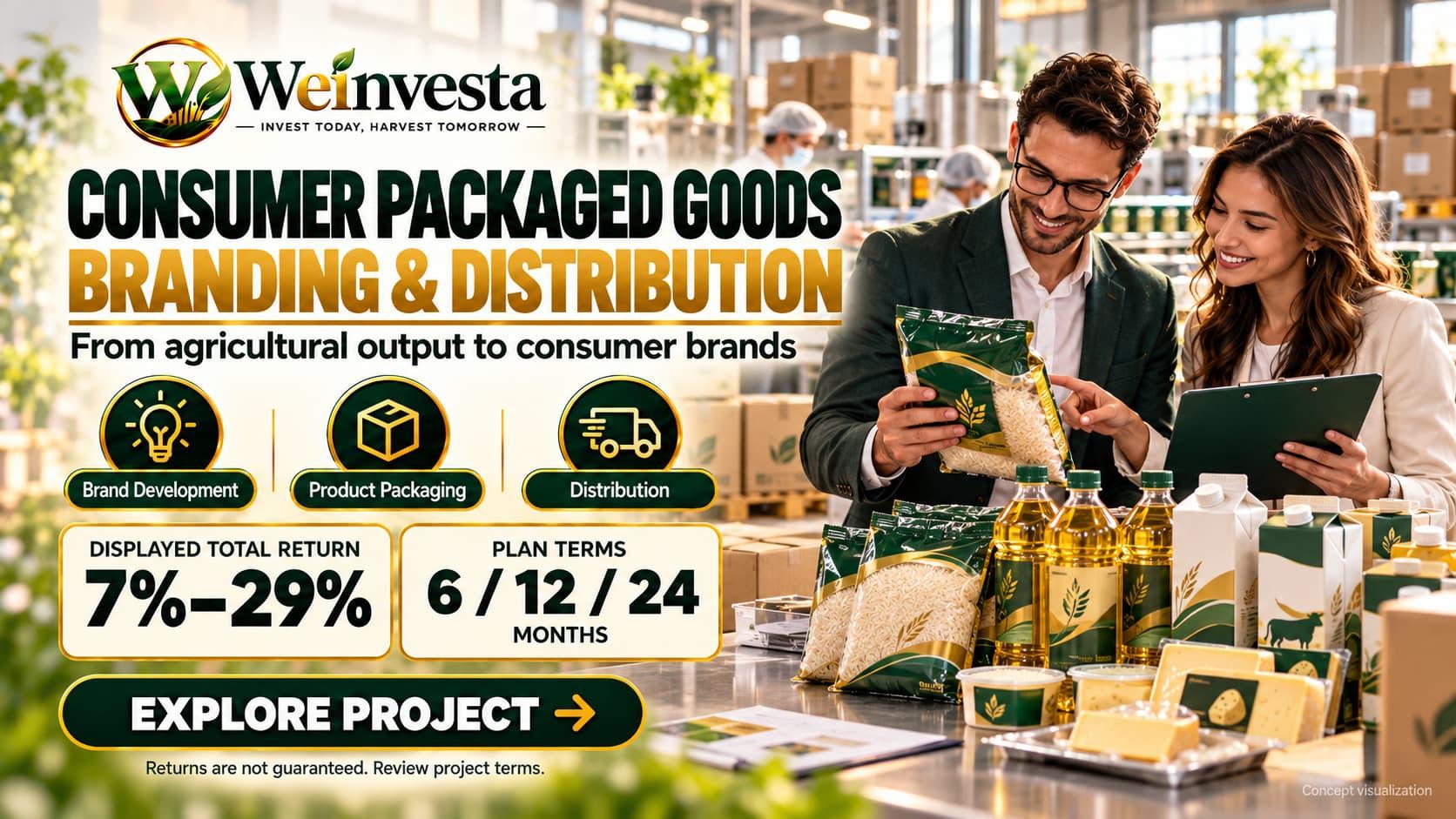
CPG Branding and Distribution: Turning Agricultural Output into Consumer Brands
Producing food is one part of bringing it to market. Packaging, consistent quality, brand recognition and reliable distribution also influence how products reach consumers and compete on store shelves.
Weinvesta’s Consumer Packaged Goods (CPG) Branding & Distribution Project proposes developing branded products from the wider portfolio’s agricultural and processing output. The planned approach combines product presentation, food safety systems, marketing and commercial distribution across physical and digital sales channels.
Explore the CPG Branding and Distribution Project.
Project overview
ItemDetailsCategoryRetail & Consumer GoodsGeographic scopeMulti-RegionListed statusActiveDisplayed funding target$74,701.74Estimated overall investment requirement$1.50 million–$3 millionProject-description target18% total profitDisplayed plan range7%–29% total profitAvailable plan terms6, 12 or 24 monthsScheduled payoutAt maturity
The displayed funding target and the estimated overall project requirement are different amounts. Readers should confirm which activities the current fundraising covers and how the wider budget would be financed. Funding progress and applicable terms may change.
What are consumer packaged goods?
Consumer packaged goods are products sold in ready-to-purchase packaging for everyday use. In this project, the proposed range includes rice, edible oils, dairy products, cheese, packaged staples, frozen meat and eco-friendly goods.
Branding aims to distinguish these products through identity, presentation and consistent customer experience. A higher selling price does not automatically mean higher profit: packaging, marketing, distribution and product losses must also be covered.
Connecting production with branded products
The project plans to use output from related agricultural and processing activities as the basis for consumer brands. This could support coordination between production, packaging and sales, subject to quality, supply and commercial agreements.
Related projects include the High-Capacity Auto Rice Mill, Rice Bran Oil Production and Dairy and Milk Processing initiatives.
These connections describe the proposed portfolio model; they do not establish that branded products or distribution networks are already operating.
The planned development process
The business plan focuses on:
Creating brand identities and packaging.
Establishing food safety systems.
Negotiating distribution agreements.
Securing retail placement.
Developing digital marketing and sales teams.
Launching frequently purchased staples before expanding into premium and export products.
Starting with staples is intended to build repeat purchasing and distribution experience. Expansion would depend on product acceptance, costs and sales performance.
How products could reach customers
The commercial strategy proposes supermarkets, wholesalers, e-commerce, diaspora markets and export distributors.
Supermarkets and wholesalers could provide physical distribution, while e-commerce could offer another route to customers. Diaspora and export markets are proposed opportunities rather than confirmed markets or contracts.
The Retail and Supermarket Chain Expansion Project illustrates a related proposed retail outlet. The transport and cold-chain logistics project provides context for moving and preserving relevant products.
Potential revenue and brand value
Revenue would principally come from selling packaged goods through the proposed channels. The plan includes private-label and house-brand strategies intended to improve gross margins and repeat purchasing.
Commercial outcomes would depend on purchase and production costs, packaging expenses, distributor terms, shelf access, marketing efficiency and consumer demand. Brand loyalty is an objective to develop, not an established result.
Displayed investment options
Lock periodDisplayed total profit for the termDisplayed investment rangePayout6 months7%$100–$1,000,000At maturity12 months15%$100–$1,000,000At maturity24 months29%$100–$1,000,000At maturity
These percentages are displayed as total profit for the stated term, not annual rates. The cards describe fixed rates, but that wording does not establish a guarantee of payment or capital repayment.
The separate description states a $1,000 minimum, a 24-month lock and an 18% total-profit target. The cards display a $100 starting amount and different terms and return figures. Confirm the applicable minimum, selected term, return calculation and payout conditions before participating.
Review the CPG project’s investment options and compare Weinvesta investment plans.
Principal risks
Key risks include failure to gain customer acceptance, higher packaging costs, food safety claims, product recalls, dependence on distributors, competition for shelf space, counterfeit products and excessive marketing spending.
These risks can affect sales, operating costs and reputation. Product quality systems and commercial controls are intended to help manage them, but cannot remove them.
Review the risk disclosure, terms and conditions and project documents.
Frequently asked questions
What products are planned?
Rice, edible oils, dairy, cheese, packaged staples, frozen meat and eco-friendly goods.
How does the project plan to earn revenue?
Through sales of branded and private-label goods across supermarkets, wholesale, e-commerce and proposed export channels.
Are the displayed returns guaranteed?
No guarantee has been established. Results depend on product adoption, costs, distribution, marketing and other risks.
Explore the CPG project
Read the Weinvesta Whitepaper, learn how Weinvesta works, and ask the Weinvesta team to clarify the applicable terms before selecting a plan.
View the CPG Branding and Distribution Project and Investment Options
Ready to Grow Your Wealth?
Put your capital behind real-world projects with real assets behind them.