
AI-Driven Smart Urban Service Platform Investment | Weinvesta
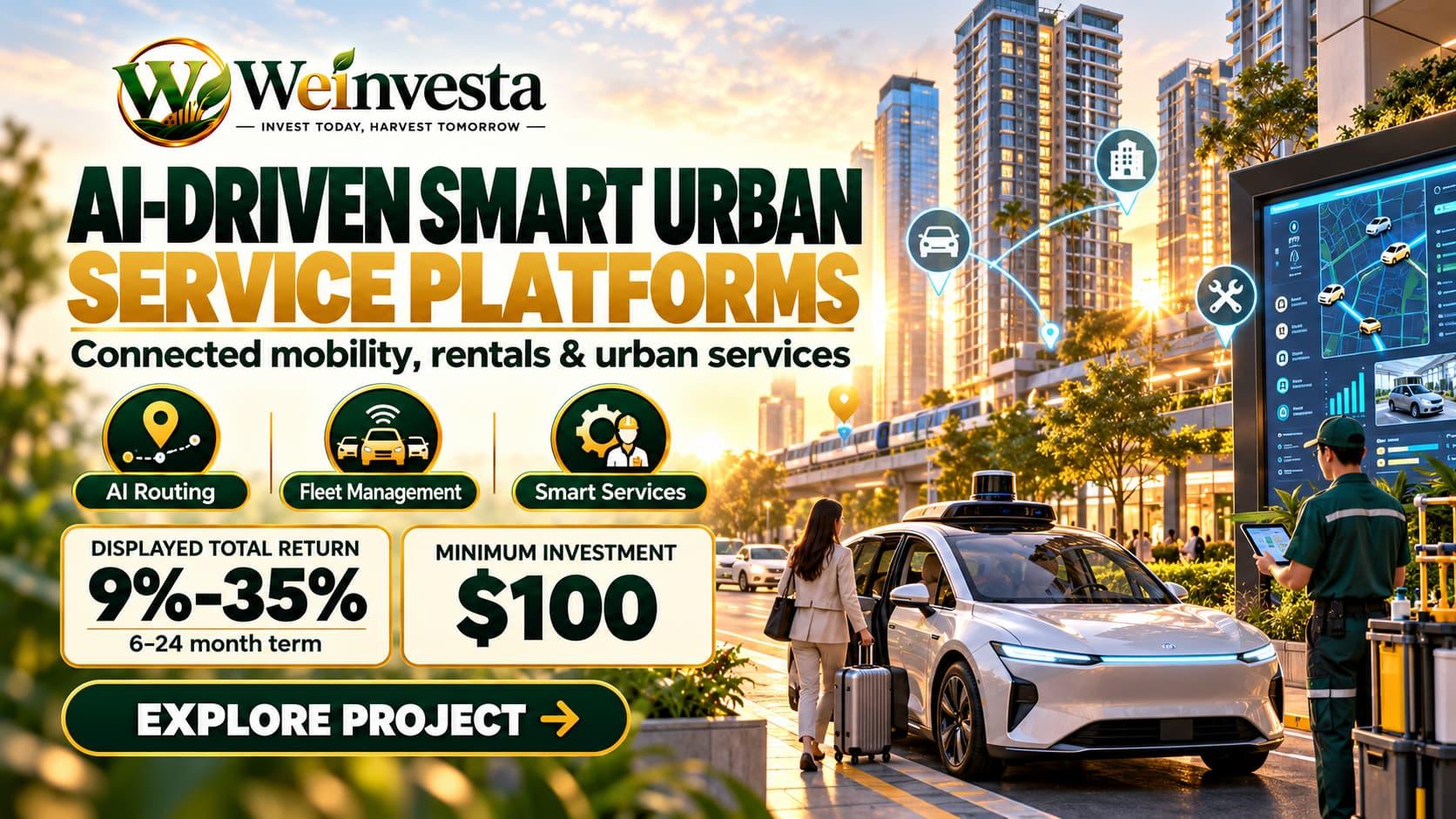
AI-Driven Smart Urban Service Platforms: Building a Connected Ecosystem for Modern Cities
Modern cities depend on digital platforms for transportation, accommodation, travel and everyday services. However, these services frequently operate through separate applications, creating fragmented experiences for customers, vendors and businesses.
Weinvesta’s AI-Driven Smart Urban Service Platforms Project plans to develop a modular suite of mobile applications supported by artificial intelligence, real-time analytics and integrated payment technology.
The proposed ecosystem covers:
Ride-hailing and urban mobility
Intelligent fleet management
Short-term rental booking
Travel and tourism services
On-demand facility management
Vendor and service-provider management
Enterprise analytics and operational tools
Explore the AI-Driven Smart Urban Service Platforms Project
Project Overview
Category: AI & Technology
Market: Global Digital Services
Status: Active
Target amount: $99,602.32
Raised so far: $0.00
Funding progress: 0%
Displayed return range: 9%–35%
Available terms: 6, 12 or 24 months
Displayed investment range: $100–$1,000,000
Payout: At maturity
Estimated project requirement: $2.00M–$4.00M
The project description refers to a 22% estimated-growth target, while the selectable plan cards display total-profit rates of 9%, 18% and 35%. Confirm the terms applying to your selected plan before participating.
What Is an AI-Driven Smart Urban Platform?
A smart urban platform uses connected software, location data, automated workflows and artificial intelligence to coordinate multiple city services.
The proposed platform may share common infrastructure across its applications, including:
Customer and vendor accounts
Booking and dispatch engines
AI-supported routing
Dynamic pricing
Digital payments
GPS and fleet tracking
Customer-support tools
Data analytics
Compliance monitoring
This modular approach may allow individual services to launch separately while sharing payment, customer-management and analytical systems.
Planned Platform Services
Ride-Hailing and Urban Mobility
The mobility platform may connect passengers with eligible drivers and transport operators.
Potential features include:
Real-time ride requests
GPS-based driver matching
Route optimisation
Fare estimates
Digital payments
Trip monitoring
Ratings and customer support
Safety and compliance controls
Intelligent Fleet Management
Commercial operators may use subscription-based tools to monitor vehicle locations, route performance, driver activity, maintenance schedules and fleet utilisation.
This component could create recurring B2B subscription revenue.
Short-Term Rental Booking
The rental platform may allow qualified property owners and managers to list residential, holiday or commercial spaces.
Potential revenue sources include booking commissions, service fees, featured listings and property-management subscriptions.
Travel and Tourism Services
The project plans to connect accommodation, transportation, tours and local experiences within a digital travel-booking ecosystem.
On-Demand Facility Management
Residential and commercial customers may request services such as:
Cleaning
Property maintenance
Electrical work
Plumbing
Security support
Landscaping
Equipment servicing
Property inspections
The platform may earn commissions from completed service bookings and subscriptions from commercial clients.
How Artificial Intelligence Could Be Used
Route Optimisation
AI may analyse location, traffic and demand data to recommend more efficient routes.
Dynamic Pricing
Pricing tools may consider demand, availability, distance and service conditions. Human monitoring would remain necessary to identify errors or unfair outcomes.
Demand Forecasting
Historical booking information could help predict when and where customer demand may increase.
Vendor Matching
Automated systems may match customers with suitable drivers, properties or service providers based on location, availability and service history.
Fraud Detection
Analytical models may identify unusual account, payment or booking activity for further investigation.
Customer Support
AI-supported tools could answer common questions and provide booking updates while sending complex cases to human support teams.
Business and Launch Strategy
The business plan proposes a modular, city-by-city launch to control development costs and operating expenditure.
Planned development includes:
Mobile and web applications
User, driver and vendor onboarding
Booking and dispatch engines
AI routing and pricing tools
Integrated payment systems
Customer-support infrastructure
Analytics dashboards
Data-protection controls
Compliance and dispute-management systems
Enterprise administration tools
A phased launch may help the project test market demand and operational performance before entering additional cities.
Potential Revenue Sources
The project may generate revenue through:
Commissions from rides and service bookings
Rental and travel-booking commissions
Fleet-management subscriptions
Featured vendor and property listings
Business software subscriptions
Enterprise-service contracts
Permitted payment-processing services
Analytics and operational tools
Revenue depends on user adoption, transaction volume, pricing, competition, operational costs and regulatory requirements.
Explore Weinvesta’s broader technology portfolio through the Next-Gen AI and Enterprise Automation Project.
Displayed Investment Options
TermDisplayed total profitInvestment rangePayout6 months9%$100–$1,000,000At maturity12 months18%$100–$1,000,000At maturity24 months35%$100–$1,000,000At maturity
The plan cards show an investment range beginning at $100, while a separate project-description paragraph states a $1,000 minimum. Confirm the currently applicable minimum on the live project page or with the Weinvesta team.
Displayed returns are project targets and do not guarantee future results.
Compare Weinvesta Investment Plans
Principal Risks
Customer-Acquisition Costs
Entering competitive digital markets may require significant spending on marketing, incentives and partnerships.
Platform Competition
Established mobility, rental and travel platforms may have larger user bases and greater resources.
Low Adoption
The project may not attract enough customers, drivers, vendors or business clients to achieve efficient transaction volume.
Provider Quality
Poor performance from drivers, property hosts or service vendors could cause complaints, refunds and reputational damage.
AI and Pricing Errors
Incorrect routing, matching or pricing may create operational, regulatory or customer-service problems.
Regulatory Restrictions
Mobility, rental, travel, payment and employment rules differ across countries and cities. Some services may require local licences.
Data Privacy and Cybersecurity
The platform may process identity, location and payment data. Breaches, fraud or account takeovers could cause financial and reputational harm.
Delayed Monetisation
Growing a user base does not guarantee immediate profitability. Marketing and expansion costs may delay positive cash flow.
Read the Weinvesta Risk Disclosure, Terms and Conditions and project documents before participating.
How to Explore the Project
Open the AI Smart Urban Platforms project page.
Review the business model, documents and risks.
Compare the 6-, 12- and 24-month options.
Confirm the applicable minimum investment.
Consider your objectives, liquidity needs and risk tolerance.
Read the Weinvesta Whitepaper.
Learn how Weinvesta works.
Use the investment button associated with your preferred plan after reviewing its current terms.
Frequently Asked Questions
What is the project designed to build?
A modular suite of AI-supported applications covering mobility, fleet management, rentals, travel booking and facility services.
How could the project generate revenue?
Potential revenue sources include platform commissions, subscriptions, booking fees, featured listings and enterprise contracts.
What investment plans are displayed?
The plan cards show 9% for six months, 18% for 12 months and 35% for 24 months.
When are payouts scheduled?
The displayed plans state that payouts are scheduled at maturity.
Why does the description mention 22% while the plans show up to 35%?
The project description states a 22% estimated-growth target, while the selectable plan cards display 9%, 18% and 35%. Confirm the applicable terms before participating.
Are returns guaranteed?
No. Results may be affected by adoption, competition, regulation, operating costs, cybersecurity, technology performance and other risks.
Explore the AI Smart Urban Platform Project
By connecting mobility, fleet management, rentals, travel and facility services through shared digital infrastructure, the project aims to build a diversified urban-services ecosystem.

Ready to Grow Your Wealth?
Put your capital behind real-world projects with real assets behind them.